
Learn to Write by . . . Writing

Writers need to write. And writing to yourself is a good place to start. Take notes, jot down ideas, and keep detailed records of what you’ve done or plan to do in your research project. This way you are using your writing to help you think, not just writing to summarize what you already did and thought. In other words, you can use writing to discover what you have to say. This discovery is one of the fun parts of writing; I think that it’s boring to write down what I already know.

If you keep notes as you go along, you will be able to remember your own process of coming to know this new information; these notes should help you figure out how to explain your findings to people who do not yet know what you’ve already found out.

When you have to write about your project more formally, no matter what the format, you have something more than hindsight to work with. You can paste together what you’ve already written, and then revise it. It’s much easier to write when you have some words on the page, talking back to you, telling you what’s missing or what could be clearer. Writers produce dozens of drafts of any good text they produce. If you are reluctant writer, you might not be as eager to do write all those drafts, but think of the efficiency of working from pieces you’ve already written!

Some of your best ideas—for writing and for everything else– will occur to you when you are falling asleep, walking to class, or standing in line somewhere. Jot these down. Then when you actually have to sit down at your task and produce a draft, or the next draft, you will have something to start with. Respect your random ideas—comparisons, phrases, connections–enough to scribble them down, and you will find it much easier to begin writing.

You won’t know what your choices are until you draft a few different versions of any text, until you experiment. Your decisions will tend to fall in a range between two opposites: predictability and surprise, complexity and simplicity, clarity and confusion, explaining and expecting your reader to know. Many other binary opposites could go here, but you probably get the idea. You can fondly look after your readers, or you can disrespect them and be demanding of them. Guess what works better.

Try to make a plan for yourself. Start by writing x mins/day or y hours/week.
 

Why read? or, how to connect to your audience

Think about writing with your readers in mind. What do your readers want? How do you know? Well, what do you want when you read an article? And what do listeners hope to get out of a presentation at an engineering conference? Remember your own disappointments and struggles as a member of the audience. Then better satisfy, and even pleasantly surprise, your own reading and listening audiences.

Most of my publications are in academic journals in a different field from yours: American literature. Somehow, however, Gertrude Stein is related to everything, and the hot topics of fame, food, self-expression, identity, and genius are lovely doors into a short (and no doubt edifying!) story about Gertrude Stein.

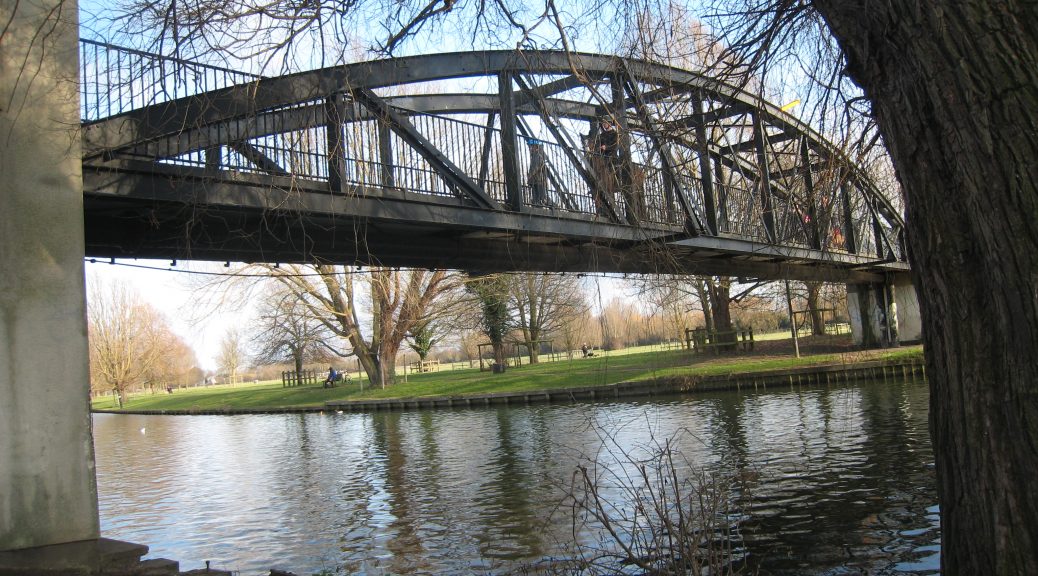
Writers can learn by reading in any field. What I’m getting at is that knowledge is always communicated by helping a person step from what she knows to what she doesn’t yet know, and from what interests her to what doesn’t yet interest her. The bridges across require the wit of connecting different ideas, interdisciplinary interests, and an attention to current events and hot topics.

So read, and have fun seeing new connections, new bridges.

Jared Lanier’s Book “You Are Not A Gadget: A Manifesto”

This is the kind of book I like: one by a knowledgeable person in a scientific field, a creative even quirky person, in fact, and one taking a contrarian point of view. Lanier was certainly raised to be different; his entry in Curious Minds: How a Child Becomes a Scientist reveals the perfect if somewhat lonely childhood for a creator, to the extent that he got to design his family home. He seems to have gone to public school, but his peers seem to have been scientists working at Los Alamos.

But back to that point of view. Lanier’s not a Luddite—he’s a computer scientist, after all, and most Luddites are not especially tech-savvy. But Lanier’s not so sure that the internet has made us better or happier people. Valuing the development of the individual person, Lanier’s suspicious of at least two different and important creeping ideas caused (he says) by the ways that computer scientists set up computer interfaces, software, and the internet. For one, humans are induced to think of their minds as computers, at least to some extent. And second, the “hive mind” is seemingly validated as having a “legitimate point of view”—over those of unique individuals (4).

Lanier’s assertions and questions, though, while reassuring that there is someone prominent in computer science who cares about philosophy and the human experience, largely supply more reasons to be concerned about technology’s effect on humankind. Because this technology forms “extensions to your being” and influences how people “connect to the world and other people,” it can “change how you conceive of yourself and the world” (5-6). As Lanier says so well, “We tinker with your philosophy by direct manipulation of your cognitive experience, not indirectly, through argument” (6).

The big obvious problem with this is that we don’t know when our experience is being manipulated. Doesn’t that sound Orwellian to you? It reminds me of the time that George Orwell sent an article about WWII England to the USA, and the editor happily reported that it came with nothing censored out; in fact, the censor had retyped that page so it was not apparent that anything had been removed, and Orwell only figured this out because the government (possibly accidently) wrote him a letter telling him that his letter had been censored. According to The Filter Bubble, when I Google a topic, I’ll get different answers than someone else googling the same words. In both cases, we don’t know when or how we’re censored or directed.

We get what we want, or at least what we’ve wanted in the past. And that’s one of the problems that Lanier touches upon: “Being a person is not a pat formula, but a quest, a mystery, a leap of faith.” Will Google let me become the person I’m capable of becoming if it only shows me stuff I already know and/or like?

Of course, I live in a world beyond the internet. But that real world is much less cooperative than the one in front of me on the screen. I don’t notice it much, but I see it with my son: he’s in control on the computer, pushing buttons makes him jump, climb, shoot. It’s all fast and easy. Once his mother lets him on the computer—and there’s some big friction on that topic—the friction stops. Lanier discusses this himself: a creative mind can communicate more easily at a younger age via technology than speech. In other words, a smart kid can take a lot in at an early age, but sometimes has difficulty expressing himself. Technology can help him. But as technology becomes more ubiquitous, the child may never wean himself from this too-easy media of not-quite-full self-expression.

I’ve raised only a few of the topics that struck me as most interesting, but Lanier’s book raises multiple issues that engineers would do well to consider and try to address.

The Plan, the Hope

If you do research in electrical engineering–or if you are in another field of engineering and want to publish research in academic journals–please stick around. I intend for us to create a supportive and productive community.

I am lucky to work regularly and closely with a highly intelligent and ambitious population of graduate students in Electrical Engineering (at UCLA). Over the last eight years, I have learned more than I can say from them, and I expect that will continue.  I have not found another graduate program in engineering that requires a course in academic rhetoric, and so I am uniquely positioned to see the needs and develop the support mechanisms for this group of writers.

I’d like to believe that all this experience will not just evaporate and that I can create a growing and broadly useful body of work online.

I also hope that this choice of media will welcome an increasingly rhetorically-aware group of advanced engineers to contribute to that practical and very specifically targeted body of knowledge.

If there’s one thing I’ve learned from engineers, it’s efficiency. If we can build on each others’ knowledge, we can each optimize our own design for writing.

css.php