Here’s a new version of Writineering, now helpfully supported by UCLA and intended not just for graduate students in engineering but for writers at all levels who are eager to explore science, engineering, or technology. Academic writing is at its best when it borrows from public science writing, and writing for the public achieves more and better ends when it borrows careful, ethical data collection, analysis, and referencing from academic writing. We have many shared roots; good writing identifies its sources; and the best writing has an author’s thumbprint visible (see photo). As Jaron Lanier writes in You Are Not a Gadget: A Manifesto, “there is no evidence that quantity becomes quality in matters of human expression or achievement. What matters instead, I believe, is a sense of focus, a mind in effective concentration, and an adventurous individual imagination that is distinct from the crowd” (50). And so while this is a software-dependent website, please remember that it’s for people, by a person. “Keep that in mind when writing anything” is recommendation #1.

Three Years Out: A Talk with S
S and I talked via Google Hangouts at lunchtime on a Sunday. While my camera was poorly positioned, showing the bed (made; phew!), the mess on the dresser, a mirror weirdly reflecting the window behind the laptop, and me with my wet hair (how did I forget this was a video call?), hers only showed her face and the upper corner of a white room. She clearly does this more than I do, already revealing her professionalism. This state of affairs in itself highlights one reason that I wanted to have this conversation: what do professional engineers really need from academics like me?
S got her PhD a few years ago, and we know each other because she took EE 295 and participated in a short-lived EE Book Group. (We met for four or five quarters, and then people graduated before we’d repopulated the group.) She sees herself more as a mathematician than an engineer, and after two years in industry, she’s now in the first year of a two-year post-doc. She’ll soon begin applying for faculty positions.
As part of the run-up to the application process, S says she is trying to get invited to give talks at many universities, even if they are not hiring. She reminds me that “these talks have to be understandable to everyone in the audience, which can be tricky since most people aren’t working on remotely the same thing as you are, yet still need to feel included in the talk.” And this statement reminds me of what my neighbor, a UCLA physiology professor said later on that same Sunday when she was discussing a job candidate: “he didn’t connect the dots between his work and why I should care.”
But S sympathizes with the student experience, and the difficulty of moving from details to generalities. “School’s set up to put you in that tunnel vision,” she says. And she means this in more than one sense: school makes us focus on our area of expertise, “but it can also make us feel incompetent, since our ‘product’ isn’t directly benefiting anyone (yet).” When we enter the “real world,” it’s refreshing to see how competent we really are, if we’ve retained the skills we need for that broader world of work.
S benefited from going to an undergraduate engineering school that assigned many open-ended projects; she feels that she “would have been more cautious” if she’d gone through a more traditional program. She says that the projects “brought me out of my shell” and gave students more power of “self-determination.” Because it was a small school, she got “a lot of personal responsibility.” And because of an extracurricular role as a yearbook photographer—what sounds like the yearbook photographer–she says that she
had to go to all these events that I never otherwise would have gone to, just to take photographs of people. It really got me out of my shell; at first, I was afraid even to make phone calls to order pizza, but by the end we were all way more confident approaching strangers to get interviews for random projects.
In all these ways, S’s experience highlights the value of broadening one’s horizons, participating in many activities, meeting and talking to new people, and trying to communicate across disciplinary borders and other (often self-imposed) boundaries.
Another way to do both these things—explore beyond boundaries and communicate across them—is to review papers: “Be a reviewer for conferences, even the ones you don’t submit to,” S recommends. It’s valuable experience. During her time in industry, she did a lot of this, and she also had to give many “’broad picture” and “state-of-the-art” presentations for CEOs at the company. In one email, she writes:
Giving survey presentations was really great practice for me, because (1) it forced me to read a lot of papers on subjects I didn’t really understand and pull out the few things I thought would interest a general audience, and (2) it forced me to communicate to as broad an audience as possible. When I went back to academia, I realized this was a key skill that you don’t really learn in school—not that they don’t know how to prioritize their audience, but they’re not really under a huge amount of immediate pressure to do so.
One thing that surprised me about S’s industry job is that “they tried to figure out what [she] wanted to do and let [her] do it.” Not all industry jobs would be like this, but having your PhD probably puts you in a great position to be an explorer and motivator rather than a drudge at work. “Drudge” is probably the wrong word, since it means the person who does the “tedious and menial” work. But sometimes graduate students get in the habit of working alone in their cubicles. That alone-time can produce great work, but it’s under-appreciated if done in silence. It might not even be as useful as it could be if it were done in tandem with other people’s knowledge and goals.
S was surprised to discover that people interrupt talks in industry, and she’s productively imported this to her new academic position. She says, “at a company, people are really obnoxious and stop you every five seconds (because they’re your boss).” She adds, “if people don’t interrupt you, then you know you’ve had a bad meeting.” The advantage of being interrupted with questions is that you “get a better sense of your audience”—both what they know and what they care about. So instead of trying to overlook, ignore, or fill in the blanks herself as she listens to talks in her current university position, she’s become “the obnoxious audience person who keeps making the presenter stop and clarify things” and says that “actually, a lot of people told me this as a compliment!” I remember S’s digging down into some of our responses in the book group, so I can easily imagine the tone of her questions: not at all obnoxious, but not soft. Often, her questions and comments made the rest of us rethink or at least more carefully state our ideas.
I wanted to know what these jobs are like. I was pleasantly surprised to discover that a post-doc (or at least this post-doc) spends her time “reading papers and writing ideas.” She adds, “One thing that post-doc freedom allows you to do is to have three-hour meetings with other colleagues to discuss random ideas, which I do with another postdoc every week.” There’s also some teaching (this year, S gave two lectures; next year, she’ll teach a whole course) and “a fair amount of mentoring.” So far, she’s not had to do much grant writing or traveling.
About the mentoring, S says,
I don’t really mind mentoring because . . . working one-on-one . . ., I find it easier to engage with the student and make sure we really exploit his or her talents and ambitions. Actually, we have one student here who is really kick-ass. He’s only a first-year master’s student, but he decided he wanted to learn really hard subjects by running reading groups and teaching us. So whenever I have a hard problem that I don’t really have time to look at, I just give it to him over Slack, and he answers it for me later that week. (Does that make me abusive?)
I’d say no, and here’s why. S’s attention to the specific “talents and ambitions” of each student suggests that her need for information and this student’s goals are fully aligned. She’s giving him exactly what he needs to develop in the ways he wants. And she’s giving him what she has already said is valuable: the chance to read many hard papers, practice pulling out the ideas that are useful for a certain problem or audience, and practice explaining them to others.
Because S is successful and spirited, I wanted to pass on some sense of her “philosophy of life.” While resisting offering one, S emphasizes flexibility and gratitude. Because “the whole process” of the job search is “unpredictable” and moves at erratically slow speeds and big leaps, “there really is an element of faith” and “you just have to try your best and try not to read tea leaves.” In her case, she spent six months working diligently to get a postdoc position, “negotiating with various professors” and “testing various sources of funding, etc.” and then, “out of the blue, a prof contacted me and almost immediately the offer went through.” S summed up her philosophy this way:
Maybe just try not to take anything too seriously, and try not to be hurt when things don’t go your way? It’s easy for people who have very high aspirations to be very upset when they see people achieve dreams in ways that seem like pure luck, but the fact of the matter is we are all really lucky to be alive, well-fed, and generally safe from war and famine. Actually, there was a podcast about this, which said it really well: we always feel the headwinds, but we never appreciate the tailwinds (a biking analogy!). So maybe my life philosophy is “don’t forget the tailwinds!” Or, less pessimistically, there’s way more in life to enjoy than can be found at the end of a career path!
Once again, her message is to take the bigger picture into account!
Try this!
I have a lot of what I consider great ideas for my engineering communication class, but I just don’t have the time to use them all. When I try, the course becomes a crazy quilt (and I mean “crazy”) of activities and assignments. It becomes way to complicated for students to keep track of.

If you’re not living it now, remember or imagine the life of a graduate student in engineering at UCLA. You are pulled in many directions, at the beck and call of your advisor, feeling squeezed between a set of challenging expectations, and trying to meet multiple deadlines. And then I show up to teach your required writing course, all “la-di-da, this is going to be so fun,” BUT you have to check the course website every few minutes to keep up with a large set of mostly-not-very-time-consuming but surprisingly many assignments. That’s just too high a cognitive load to add to the ones these students already have.

So, on the course front: simplify, simplify, simplify.

And here, at Writineering: get all those other ideas off my chest. If you have the time to try some, alone or with others in your labs, you’ll get multiple positive outcomes.

And you’ll be saving some stressed graduate students from my inflicting them with these ideas now!

So, just to get you started, here’s big, huge suggestion number one: Read Alan Alda’s book If I Understood You, Would I Have this Look on My Face: My Adventures in the Art and Science of Relating and Communicating (2017). And then try out some of his suggestions.

While you wait for the book to arrive**, you can start trying to identify the emotions of the people you meet throughout the day. Nothing else, just spend a moment pondering their expressions and behaviors, and then think “grumpy” or “tired” or “cheerful” (or whatever else seems appropriate).

Why? For one, you’ll start to notice how often you just barge into a conversation without paying any attention to the other person’s receptivity or mood. Second, you’ll be developing a habit of attention. Third, you’ll probably get better at identifying moods, since your subsequent interaction will give you feedback about how accurate you were. And fourth, you’ll be able to choose your words more appropriately, and have a more productive conversation, with this information at hand. Let me know if you find other benefits, too!

** A note about getting books. I have a lot of ways of accessing books, so I’m going to describe them here. You can probably find similar resources where you live, although the collections might not be as huge. First, I can order it new or used online. This is great: you own the book! But you also have to find shelf space for it, and you have to wait a couple of days. (Of course, you could read it, and then start passing it around to your friends and colleagues—this leads to fun conversations.) Second, I can go to Hoopla and connect to the Los Angeles Public Library, and they usually have the e-book or an audiobook that I can download. I can also go directly to the LAPL website, find the book, and it’s often available by download through Amazon or I can ask them to deliver the physical copy to my local branch library. If they don’t have it, I can check the e-resources of other local library systems (in my wallet are cards for the Beverly Hills Library, the Pasadena/Glendale Library, the Santa Monica Library, and the Culver City Library, but between LA and Beverly Hills, I can pretty much access what I need). You, too, can probably join more than one library system near you. Third, I can use the UCLA Library and even interlibrary loans to get almost any book for free. Sometimes interlibrary loans are a long wait, however.
Data on the need to define terms
Often, engineering writers tell me that they do not need to define their terms because their audiences know what they are talking about. So this week, I did an experiment in two classes, one of 18 students and one of 23 students. They were to write down words and phrases that they need to use when discussing their work. And then we passed the lists to every other person in class, who each marked the words they did not know. They might have heard them before, but they would have to look them up, or they’d feel that the term was vague or ambiguous. In short, they’d like it to be defined. Here’s the data.
There were close to 400 unique terms, and about half of them were familiar to most people (no more than two people, or about 10%, were confused by them). But about half confused more people than that, and some confused over 60% of the people in the room.
I want to emphasize that everyone was a PhD student in the Electrical and Computer Engineering Dept. at UCLA. They’ve all passed their preliminary exam. They are the most informed audience one might hope to have, beyond one’s lab partners. Yes, we sometimes talk to people in our very specific fields, but others should be able to understand us, too! When you go ranging around the literature for ideas, you’d like to feel that the authors are trying to help you!
I hope to continue this exercise with future classes, so I can collect more data.
One note: if there are several numbers to the right of a term, that means that more than one person put it on his or list list. In the smaller class, no term was listed by more than two people; in the bigger class, some terms were listed by four people.
Your reading is as important as your writing
While I’m trying to get us all to write as clearly as we can, some texts are just difficult to read. Those texts are still worthwhile; they may even be more important.
The difficulty may come out of not having enough experience with the genre or the content. It might be that the author is making a very tight distinction, one that’s hard to pick up. It might be that the content is deeply philosophical, or that the ideas are so surprising that the reader keeps trying to get the words to mean something more familiar.
But the difficulties do not mean that the text should be ignored. Yes, I want writers to be as clear as they can. I want them to be as easy to read as possible. But not all things are easy. And sometimes simplicity involves cutting too much out. Lots of material is complex. You know this in engineering, and you probably also have a pretty good idea that other areas—economics, ethics, cultures, psychology, even just describing a moment in the world the way that it happened—are complex, too.
Sometimes when you say “fine” in response to “how are you?” you mean it. But usually there’s a lot more that could be said. Keeping it simple is not always accurate!
I recommend this article by Tegan Bennet Daylight in The Guardian (12/25/17): “’The difficulty is the point’: teaching spoon-fed students how to really read.” Daylight is a college teacher in Australia, but the description of her experiences seems relevant to the ways that many students approach reading: if it’s not easy, completely “relatable,” then it’s not going to get read.
I’d love for you to go read this whole article, but I’ll still share my favorite paragraph with you. After citing a single first sentence of a novel, she writes,
If you are reading this essay, you’re a reader. You probably know this sentence, and if you don’t, you are comfortable with interpreting it. You can hear a character beginning to form: its romantic, optimistic, nostalgic voice; a voice yearning for simplicity; probably, in its deliberate imitation of a child’s singsong, the voice of a woman, a mother. You know it might take a few pages to learn just who this woman is. You’re skilled in this sort of patience.
That’s completely true. Familiarity with the process of reading a novel means that a person has the patience and anticipation to wonder what might be coming next. This works for novels, and it also works for science writing.
For example, I had always enjoyed reading as a kid, but when I moved to another country I did not have much access to books in English. There weren’t any English-language children’s books, so I started reading classics (Robert Louis Stephenson, Arthur Conan Doyle, Jane Austen, Charles Dickens, etc.). They were hard. It was frustrating at first. I’d start a book and give up. Gradually, out of desperation, I pushed through a few. And I came to realize that it just took a few chapters to get used to the types of sentences characteristic of each author. I got “skilled in this sort of patience.”
And the same is true for academic writing in science and engineering. If a reader just starts at the beginning, they are likely to be overwhelmed by the jargon in the abstract. But knowing where to find help—which sections might be more elementary, where terms might be defined, etc—gives someone a leg up. And then patience, confidence that this CAN be figured out (but not read linearly, until much later) will lead to success.
Finally, read. Read books. Read the New York Times. Read the New York Review of Books. (And let me know what your reading, so I can read it, too! What DO working engineers read, that they talk about together?) Daylight concludes that she wants her students to “to discover that if they learn to handle language they’ll no longer be helpless, drowning in sugary gratification.” And she wants “them to see that reading breeds thinking, and thinking breeds resistance.” That’s what I want for my students, too. Read and be provoked to think and act. I want you to express yourselves–after taking some time to read and to think what that really means.
Introducing the hard stuff
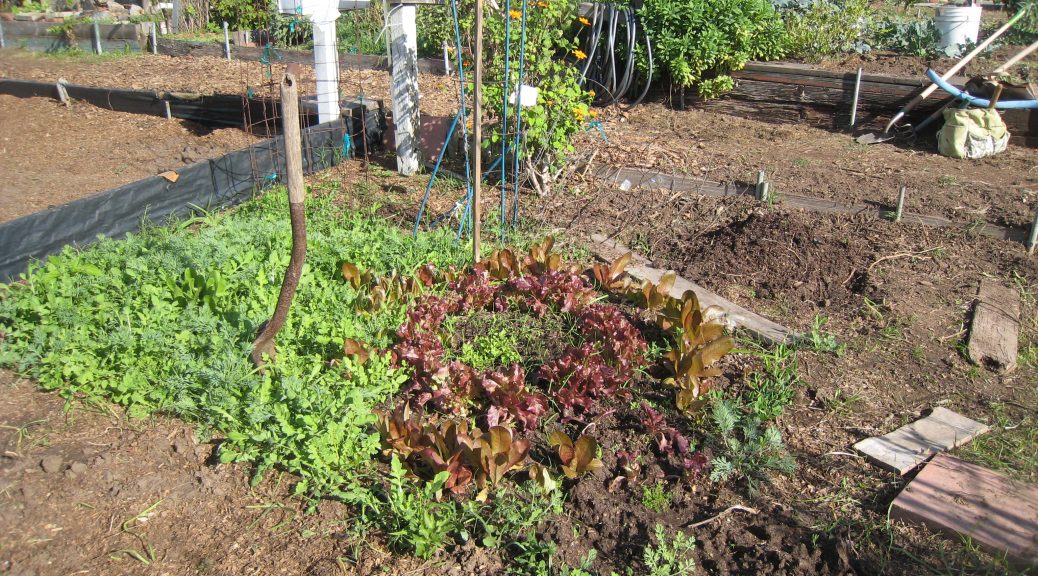
My class this quarter has gotten used to us talking about the “topography” of any piece of writing. It seems to be a helpful word in many situations, but now I want to discuss the varying levels (or altitudes) of difficulty as one moves through the landscape of the text. Sometimes the writing is hard, and sometimes it’s got to be easy (or the reader will give up). This variation is mandatory in public science writing, but you might be kind enough to give your readers a break in your academic writing, too.
In his (public-focused but pretty difficult) 2017 book Behave: The Biology of Humans at Our Best and Worst, Robert Sapolksy writes these two paragraphs as part of the introduction to an early chapter:
This chapter is one of the book’s anchors. The brain is the final common pathway, the conduit that mediates the influences of all the distal factors to be covered in the chapters to come. What happened an hour, a decade, a million years earlier? What happened were factors that impacted the brain and the behavior it produced.
This chapter has two major challenges. The first is its god-awful length. Apologies; I’ve tried to be succinct and nontechnical, but this is foundational material that needs to be covered. Second, regardless of how nontechnical I’ve tried to be, the material can overwhelm someone with no background in neuroscience. To help with that, please wade through appendix 1 around now.
(pp. 21-2)
Notice several things here:
1. He offers “metacommentary” that communicates these messages: “What I’m about to say is important.” “This is complicated, but I’m doing my best to make it as easy and clear as possible.” “If you have not taken neuroscience, then go read Appendix 1.”
2. He offers motivating questions for this section: “how does the brain work?” and “how did the brain get the way it is?”
3. That last question is attached to the book’s overall argument in that first paragraph above: he is trying to explain all the factors that go into our behavior, factors that are immediately present and factors that happened long ago. If you’re going to make readers work hard at something, they need to know that there’s a really important reason for them to do so!
4. He uses numbers. Imagine that second paragraph without the numbers, and you will be seeing a less clear paragraph. It’s very satisfying for readers to know exactly how many ideas they are about to get, and then to tick them off. “Two. Okay: One, Two. Done!”
5. He uses the word “distal.” I probably would have avoided that. I had to look it up. It basically means “distant,” but it’s more specific to anatomy.
If you actually go read the rest of Sapolky’s book, you’ll see him describing the way that our emotional experience influences our intellectual decisions. If your readers get frustrated—especially if they think that this is more your fault than theirs—then they are going to be less likely to make positive evaluation. Their emotions, not just logic, will influence their decisions.
Freedom within expectations
If you tell someone you’re an engineer, you might then get the feeling that they think that they know a lot about you already. Engineers—like people in many careers—have to contend with all sorts of presumptions about their personalities. That’s one reason why #ilooklikeanengineer was popular and important. That movement emphasized that women are engineers, but the presumptions can work against everyone. Engineers are not just (and not always) introverted and analytical. That’s just a stereotype. Engineers are all sorts of other ways, too: active, athletic, enthusiastic, assertive, creative, instinctive, chatty, disorganized, artistic, and friendly–and they have as many individual interests as there are individuals.
What this means is that you are always contending with a stereotype. If you are aware of it—and how could you not be?—you are always deciding if you want to conform to peoples’ assumptions or not. And you probably make different decisions in different situations. It’s sometimes easier just to let others think you are brilliant and quiet: they are giving you the benefit of the doubt, and you don’t have to explain yourself. Other times, it’s convenient and even maybe fun to break the stereotype: surprising people can get their attention. If you think back, you can probably think of many examples of yourself doing one or the other.
And here’s why I said all this: the same goes for genres of writing. Each type or category of text shares characteristics. Academic journal articles in electrical engineering are (1) about EE, (2) written in formal English using some language only known to people in the specific field (but not exclusively this type of language), and (3) follows a certain structure (AIMRaD, and then similar structures within each of those sections). If you were to look at a single journal article, you could define that journal’s genre of academic writing even more specifically. And then you could mimic it, structuring your own ideas in an article that fit the expectations of that journal.
But then think about your identity again. How much do you want to conform? If you looked at several articles in that journal, you would notice a range of acceptable writing choices. You would see characteristics they all share (posing a problem, giving a result, etc.) and you’d see variation (in how much context is offered, perhaps, or how many field-specific terms are defined, or the clarity of the figures and captions). Seeing this variation enables you to stop just mimicking a genre. Instead, you can take into account your own goals and values, and then make the decisions that allow you to stay within the general range of the journal’s expectations but still express yourself as you choose.

Engineering education
I’m always trying to think of ways to improve undergraduate education, and particularly undergraduate engineering education. This desire comes out of my own experiences entering UCLA as an undergraduate electrical engineering major. I took a bunch of random, disconnected classes. (I think my first quarter was the third class in a calculus sequence, introductory chemistry, and a cultural anthropology class.) After a year, I hadn’t learned much about what engineers did, I’d discovered chemistry was surprisingly difficult for me, and I had fallen in love with programming (in Pascal; this was 1984). For some reason, this random set of data encouraged me to switch to the Computer Science and Engineering major. After a bunch more physics and math, and a bit of computer architecture, I still had no idea what engineers did besides think about resistors. I got a part-time job at Hughes Aircraft as an Assistant Engineer, and I discovered that testing hardware was scary but that it was fun to follow engineers around and ask them questions so I could write down what they were doing and why. That experience, however, convinced me that I did not want to be an engineer–largely because I didn’t like working at a big defense corporation. But what if I’d had a different introduction to engineering, one that focused on what I could do with that knowledge, on imagining what I valued and how I could further those values with engineering skills, and one that centered on solving problems, not memorizing formulas for problem sets? I had actually entered engineering school with ambitious ideals for what I would accomplish, but nobody asked me about those, and none of my classes seemed related to them.
So when I read about a curriculum that immediately reveals to students how engineers think, and not only that, but also motivates socially conscious students to work hard in their engineering classes to bring about the changes they envision in the world, I am interested.
The book is A Whole New Engineer: The Coming Revolution in Engineering Education by David E Goldberg and Mark Somerville (with Catherine Whitney, who I assume did much of the writing!). They tell the story of the founding of Olin College of Engineering (started in 2000), the thinking behind the curriculum, and the ways that these ideas have been (and can be) borrowed by and adapted to much larger institutions. It’s a fascinating story in itself, and I’ll probably offer several posts on some of the key ideas. Here I’ll just add its general ideas about how to get students personally, intrinsically motivated:
- “Autonomy: making meaningful choices is a cornerstone of intrinsic motivation” (159). This means letting students make some choices; it means trusting them. “Autonomy-supportive instructors . . . spend more time listening, give fewer directives, ask more questions about what students want, verbalize fewer solutions to problems, make more emphatic statements, and offer greater support for students’ internalization of the learning goals” (159).
- “Purpose/Relatedness: Doing things that matter to your peers and to the world at large, increases intrinsic motivation” (163). This means both that students need to have sense of connection with a community for which they are designing their products, and they also need a sense of responsibility to the very people with whom they are working. Discussing the global influences of engineering, encouraging them to see how engineering has improved people’s lives (and when it has failed to do so), and having them work in teams are ways to accomplish this goal.
- “Mastery: Being effective increases intrinsic motivation”(164). This means that students need to be given opportunities to get better. They need to do something, get feedback, and improve that thing. They need to be encouraged to reflect on their accomplishments, asking “What was done well?” and “What can be improved?” (165)
The book offers many stories, and both general and specific ideas about education, curriculum, and classroom practices. I recommend that every teacher read it. I’d love to know what you think.

Advice welcome!
I’m hoping to get advice on three points, all intersecting with EE and engineering writing and pedagogy.
First, the EE TAs are going to be trained next year (by me), and while I have a good idea of my plans, I’d like some input. What did you wish you knew when you started teaching? Now that some of you are faculty, you might have an even more urgent message about that, but anyone who was a struggling, hard-working, responsible TA probably wishes they’d been given a few ideas to work with. What are they??
Second, the School of Engineering has asked Writing Programs to teach first-year composition courses directed specifically at students who have entered as engineering majors. The one and only section (so far) of English 3E is this Fall, and we have some constraints on what we achieve in there, but I’d be interested to hear what you’d include in that class. The two new areas to be emphasized, in addition to what we already teach about college composition, are “the visual display of information” and “exposition/description” (contrast that with “argument” and you might get a sense of what it means and why it’s useful for engineers). I don’t want to focus just on engineering-related topics (engineering majors get enough engineering classes!), but I want to make sure that the course offers a helpful bridge between other disciplines, writing, and engineering. Any thoughts?
And third, I need to write on this website more often, so I’d be interested in hearing what topics you have questions about (or what stories or ideas you’d be interested in sharing here!). I will try to write a few posts in advance, so that there will be a more regular posting during the busy Fall quarter.
Thanks, in advance, for your help.

A book recommendation
I’ve just discovered a book by Robert Irish and Peter Eliot Weiss that I highly recommend. In fact, I intend to use it in EE 295 next year, instead of my EE 295 Sketchbook. It’s too bad that I can’t use both, but I don’t want students to have to make both purchases. I can always use some handouts from the Sketchbook and/or recommend that students borrow a copy from a friend for the quarter.
So what’s this great book: Engineering Communication: From Principles to Practice, 2nd edition.
I have not actually read the first edition, so it may not be that different, and you can get it for a few dollars (as opposed to $25-$65 for the second edition).
If you are working on improving your writing in engineering, I cannot recommend any book more than this one. More later–when I have time to tell you more about it.
Why a cow? I haven’t yet taken a picture of the book–and this is a beautiful cow!
